
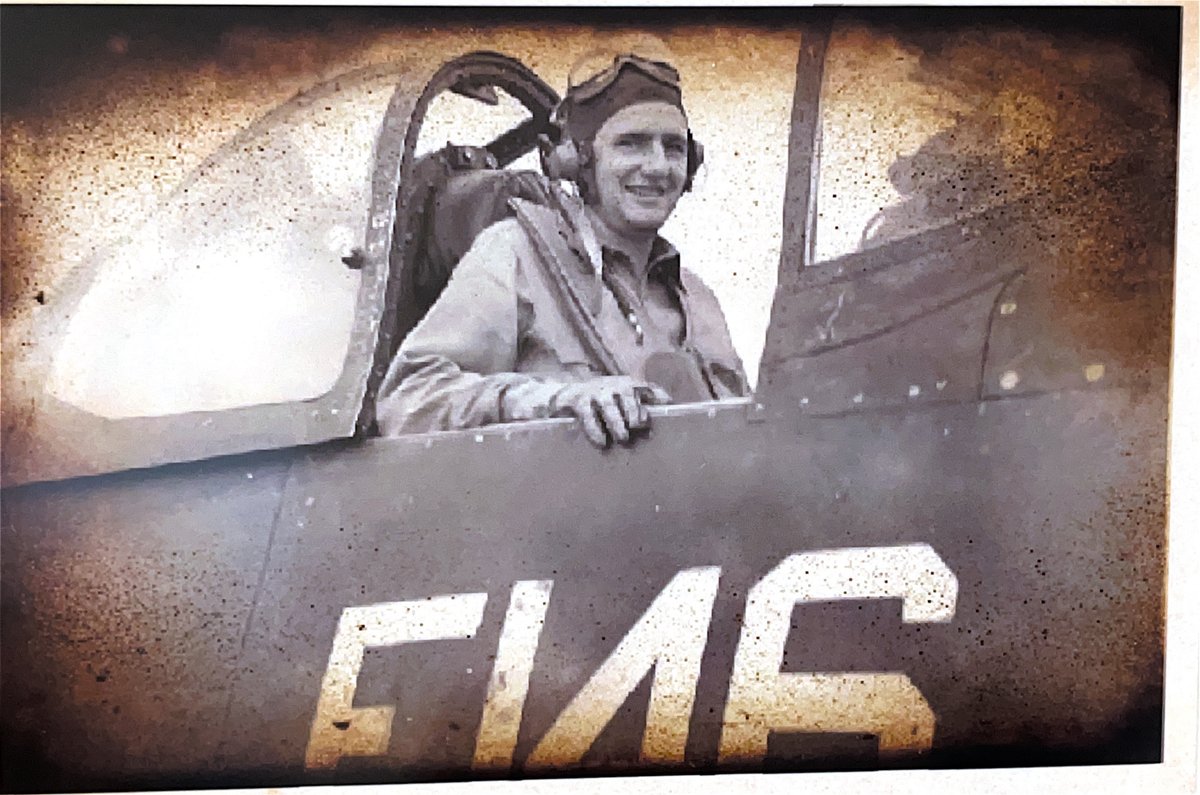
1918 – 1941
A Missouri Farm Boy Takes to the Sky
William Vincent Brooks was born December 19, 1918, in Barada, Nebraska, and grew up across the river in Bigelow, Missouri. He enrolled at Peru State College, working toward a degree and a career in teaching. Three years into his studies, with war spreading across the Pacific and Europe, Brooks set his books aside and enlisted.
He joined the Marine Corps Reserve on April 1, 1941, and was appointed an Aviation Cadet the following month. After completing his oath of office at the Naval Reserve Aviation Base in Kansas City, Brooks reported to the Marine Barracks at Naval Air Station Corpus Christi, Texas, on June 10, 1941, to begin flight training — seven months before Pearl Harbor.
He trained through the rest of 1941 and into early 1942, earning his designation as a Naval Aviator on February 19, 1942. By March, the newly minted second lieutenant was on his way west — first to San Diego, then to Hawaii, and finally to a small, low-lying atoll in the middle of the Pacific that few Americans had heard of yet: Midway.
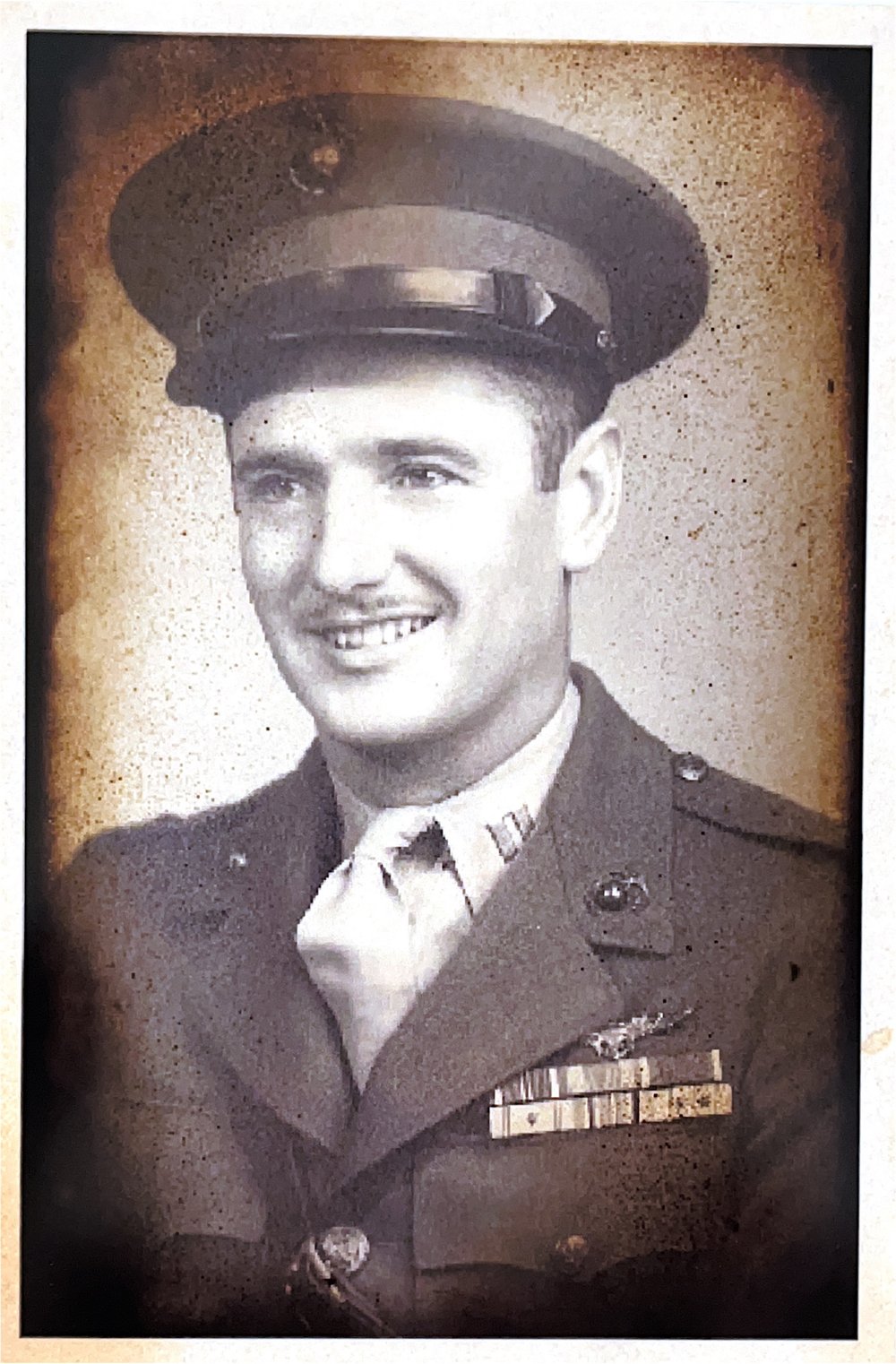
Second Lieutenant Brooks in dress uniform, Marine Corps Reserve, 1942.
June 4, 1942
The Battle of Midway
Brooks flew with Marine Fighting Squadron 221 (VMF-221), the "Fighting Falcons," in one of the most consequential air battles of the Pacific War.
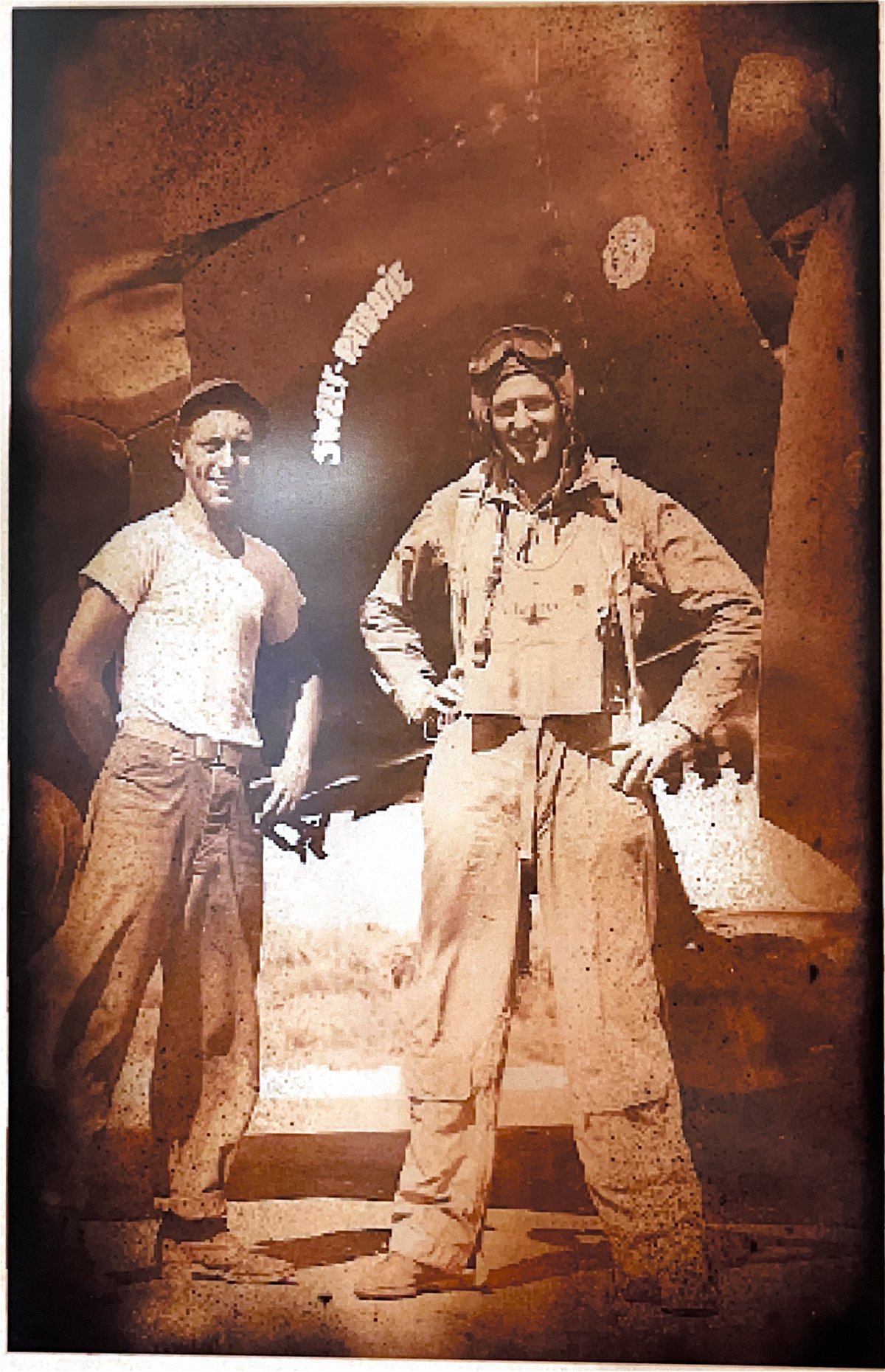
Brooks (right, in flight gear) with his crew chief in front of an F2A-3, nicknamed "Sweet Rosie."
VMF-221 had been built up piece by piece since the previous Christmas, when fourteen Brewster F2A-3 Buffalo fighters launched off the USS Saratoga and landed on Midway, originally bound for the relief of Wake Island. By June 1942 the squadron had grown to twenty-five aircraft — a mix of the aging Buffalos and a handful of newer Grumman F4F-3 Wildcats — split into five divisions. Brooks, flying F2A-3 Bureau Number 01523, was assigned to the Third Division under Captain Kirk Armistead.
At 0600 on the morning of June 4, the alarm sounded. VMF-221's twenty-five fighters scrambled to intercept an inbound Japanese carrier strike of roughly 108 aircraft, escorted by 36 Mitsubishi A6M Zero fighters. The Buffalo, already obsolete by the standards of 1942, was no match for the Zero in a turning fight, and the Marine pilots who survived later said as much in their own debriefs. The squadron pressed the attack anyway.
By the time the fighting ended, VMF-221 had lost thirteen pilots missing in action, one killed, and four wounded — including Brooks, struck by enemy fire over the island. Of the twenty-five aircraft that took off that morning, only three F2A-3s and one F4F-3 remained in flying condition. The Japanese force, despite vastly superior numbers and aircraft, suffered enough disruption and losses of its own that the action contributed materially to a battle the U.S. Navy would go on to win decisively — a turning point in the Pacific War.
From Brooks's After-Action Report
"At about 0600, the alarm sounded and we took off. My division climbed rapidly... We sighted the enemy at about 14,000 feet, I would say that there were 40 to 50 planes... At 17,000 feet, Capt. Armistead led the attack followed closely by Capt. Humberd. They went down the left of the Vee, leaving two planes burning... At this time, I had completely lost sight of my division. As I started to pull up for another run on the bombers, I was attacked by two fighters. Because my wheels being jammed 1/3 way down, I could not out dive these planes, but managed to dodge them and fire a burst or so into them as they went past me and as I headed for the water. As I circled the island, the anti-aircraft fire drove them away. My tabs, instruments and cockpit were shot up to quite an extent at this time."
"I again decided to land, but as I circled the island I saw two Japs on a Brewster. Three of my guns were jammed, but I cut across the island, firing as I went with one gun. But I could not get there in time to help the American flier and as soon as the Brewster had gone into the water I came in for a landing at approximately 0715 (estimated)."
2nd Lt. William V. Brooks, VMF-221, June 4, 1942
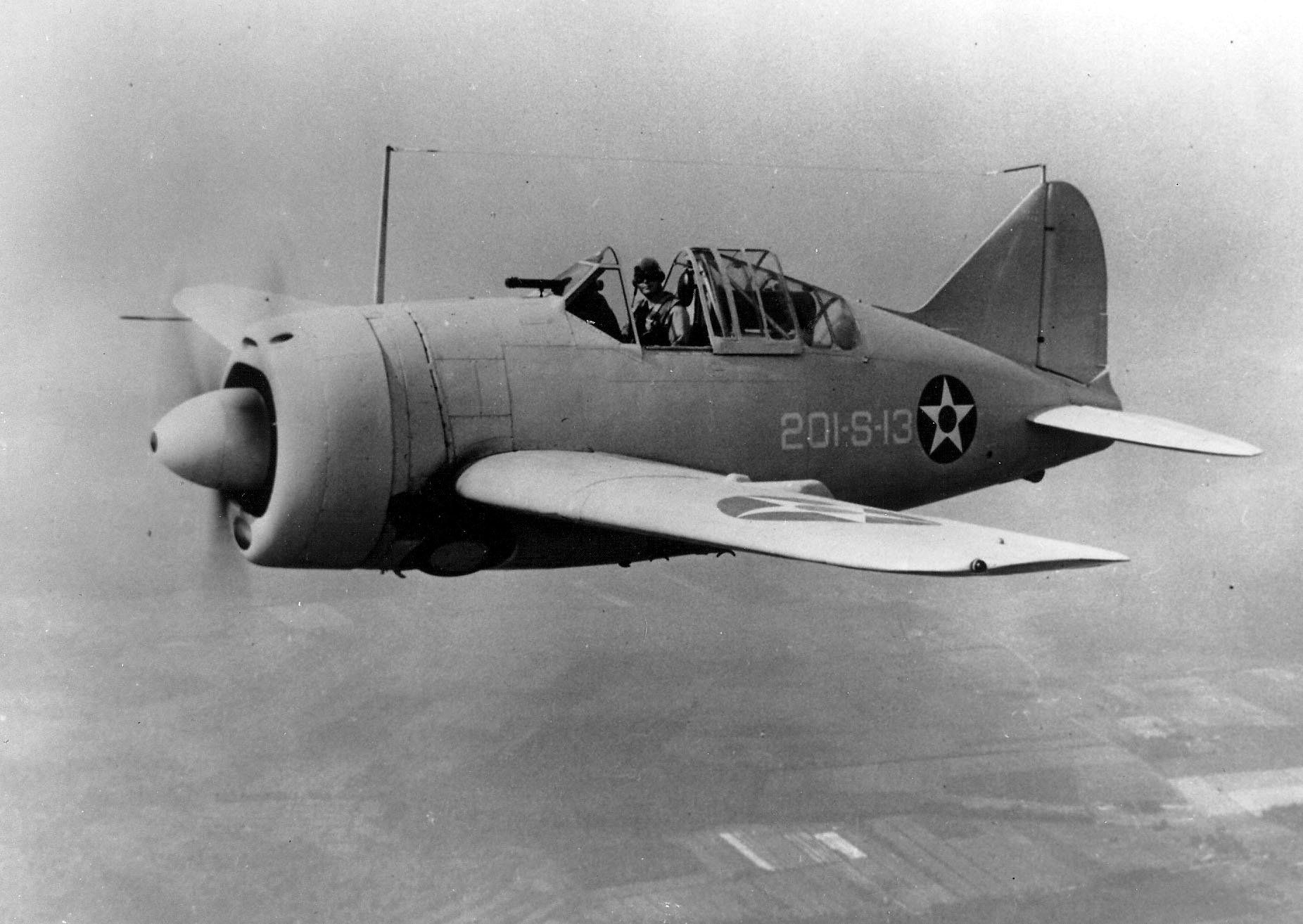
The Aircraft
Brewster F2A-3 Buffalo
The Buffalo was the U.S. Navy and Marine Corps' first monoplane fighter, but by mid-1942 it was already outclassed by newer Japanese designs. VMF-221 flew the type into combat at Midway anyway — it was simply what the squadron had on hand.
Read More About the F2A Buffalo on Wikipedia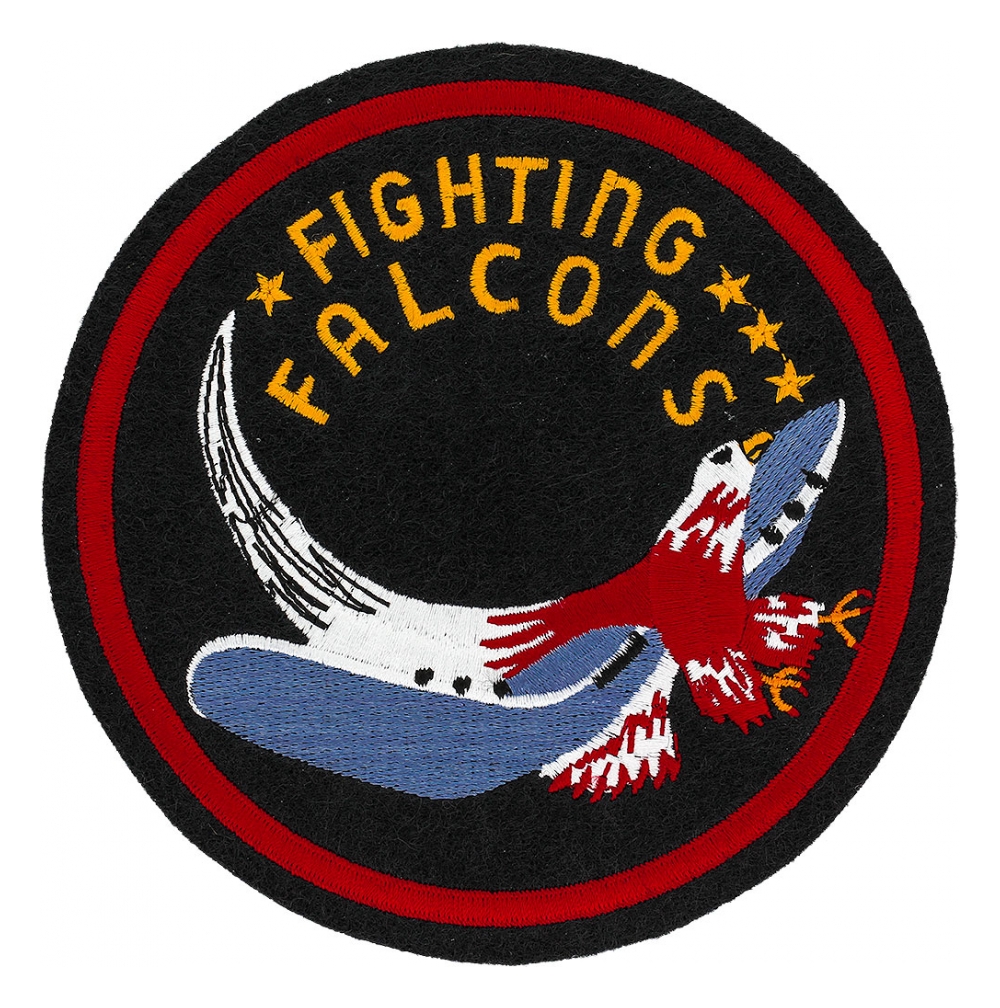
Squadron Insignia
VMF-221, "The Fighting Falcons"
The squadron patch Brooks and his fellow pilots wore into the Battle of Midway — and for the rest of the war, as VMF-221 went on to become one of the Marine Corps' highest-scoring fighter squadrons.
Decorations
Recognized for Valor
For his actions at Midway and through the remainder of the war in the South Pacific, Brooks earned three of the nation's highest combat decorations.
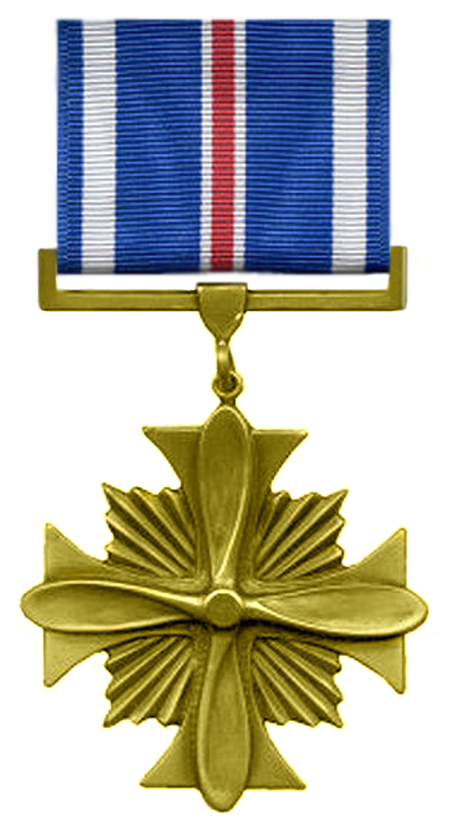
Distinguished Flying Cross
Awarded by Admiral Chester W. Nimitz for "extraordinary achievement" as a pilot in Marine Fighting Squadron 221 during the Battle of Midway on June 4, 1942, citing his fearless attack against vastly superior numbers of enemy aircraft.
Read More About the Distinguished Flying Cross on Wikipedia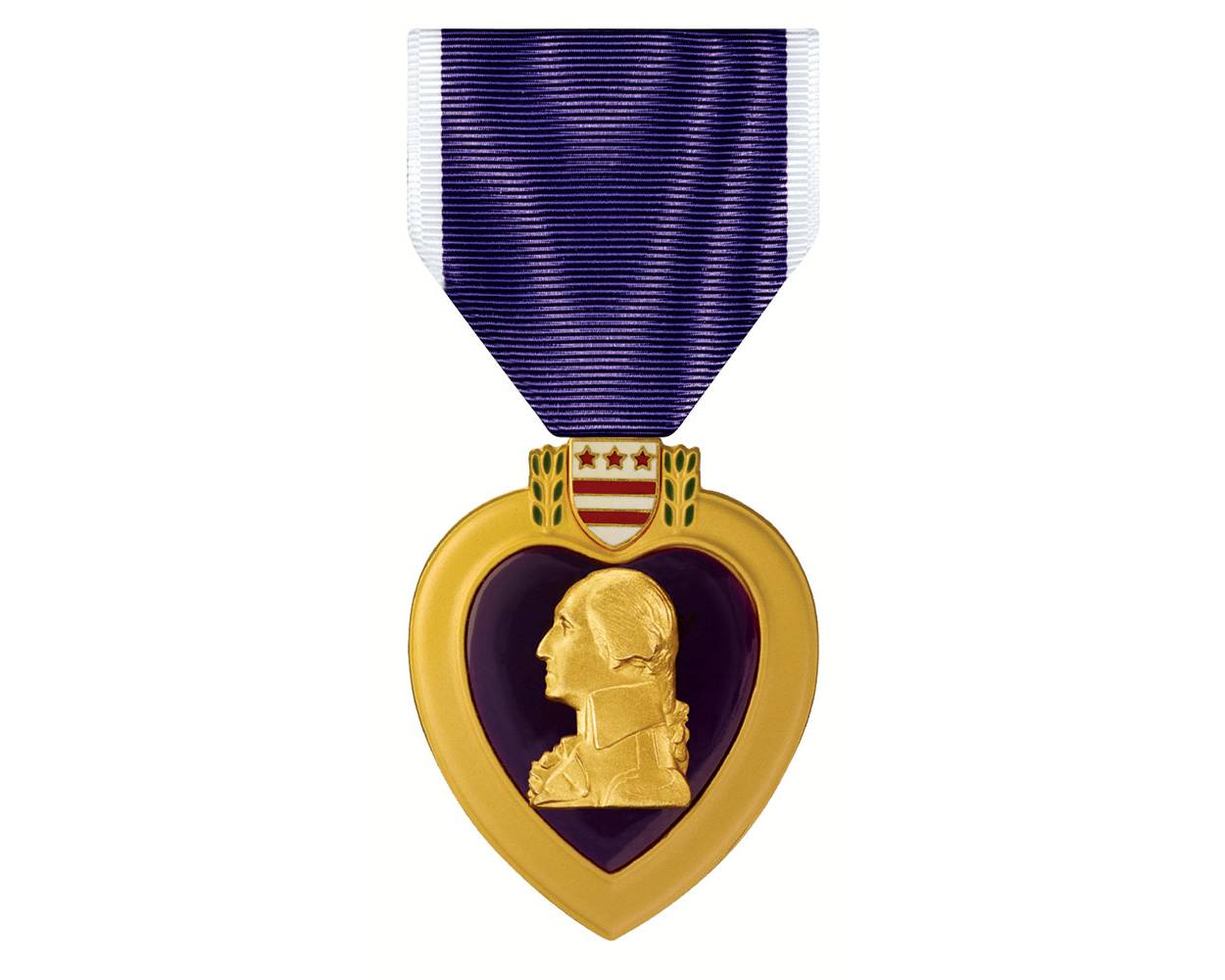
Purple Heart
Authorized June 1943 for wounds received in action against the enemy during the Battle of Midway on June 4, 1942 — the same engagement that earned him the Distinguished Flying Cross.
Read More About the Purple Heart on Wikipedia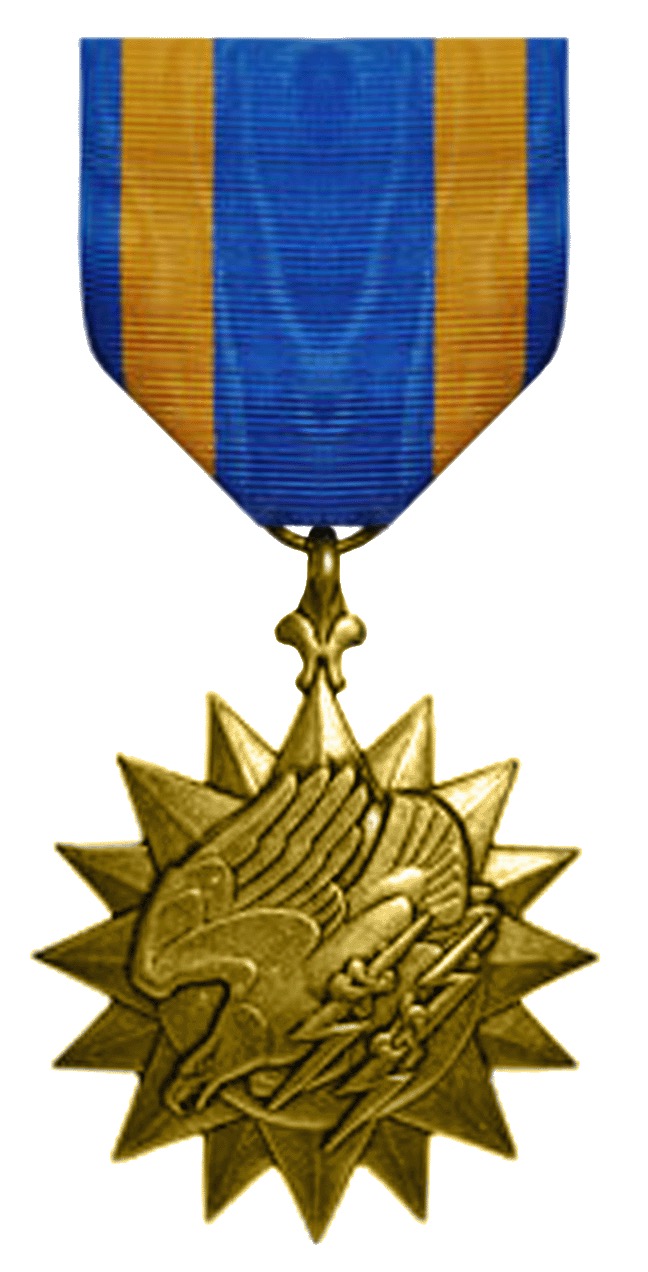
Air Medal
Awarded by Admiral William F. Halsey for meritorious achievement in aerial combat over the British Solomon Islands, where Brooks flew at least twenty combat missions and was credited with destroying two enemy bombers, with a third probable.
Read More About the Air Medal on Wikipedia1941 – 1955
A Marine Career, Start to Finish
April 1941
Enlists in the Marine Corps Reserve
Appointed an Aviation Cadet; begins flight training at NAS Corpus Christi, Texas.
February 1942
Designated Naval Aviator
Commissioned Second Lieutenant; assigned to VMF-221 at Midway Island via Pearl Harbor.
June 1942
Battle of Midway
Flies in combat against a vastly superior Japanese carrier strike force; wounded in action.
1942 – 1943
South Pacific & the Solomon Islands
Continues combat flying with VMF-223 and VMF-224; credited with multiple enemy aircraft destroyed over the Solomons. Awarded the Air Medal and authorized the Purple Heart.
1944
Promoted to Major
Serves as Executive Officer of VMF-512, then Commanding Officer of VMF-514, deploying aboard the USS Salerno Bay (CVE-110) to the Western Pacific in the final months of the war.
1946 – 1955
Continued Reserve Service
Remains active in the Marine Corps Reserve, rising to Lieutenant Colonel before his resignation is accepted in February 1955 with an Honorable Discharge.
1965 – 2010
Coming Home, Building a College
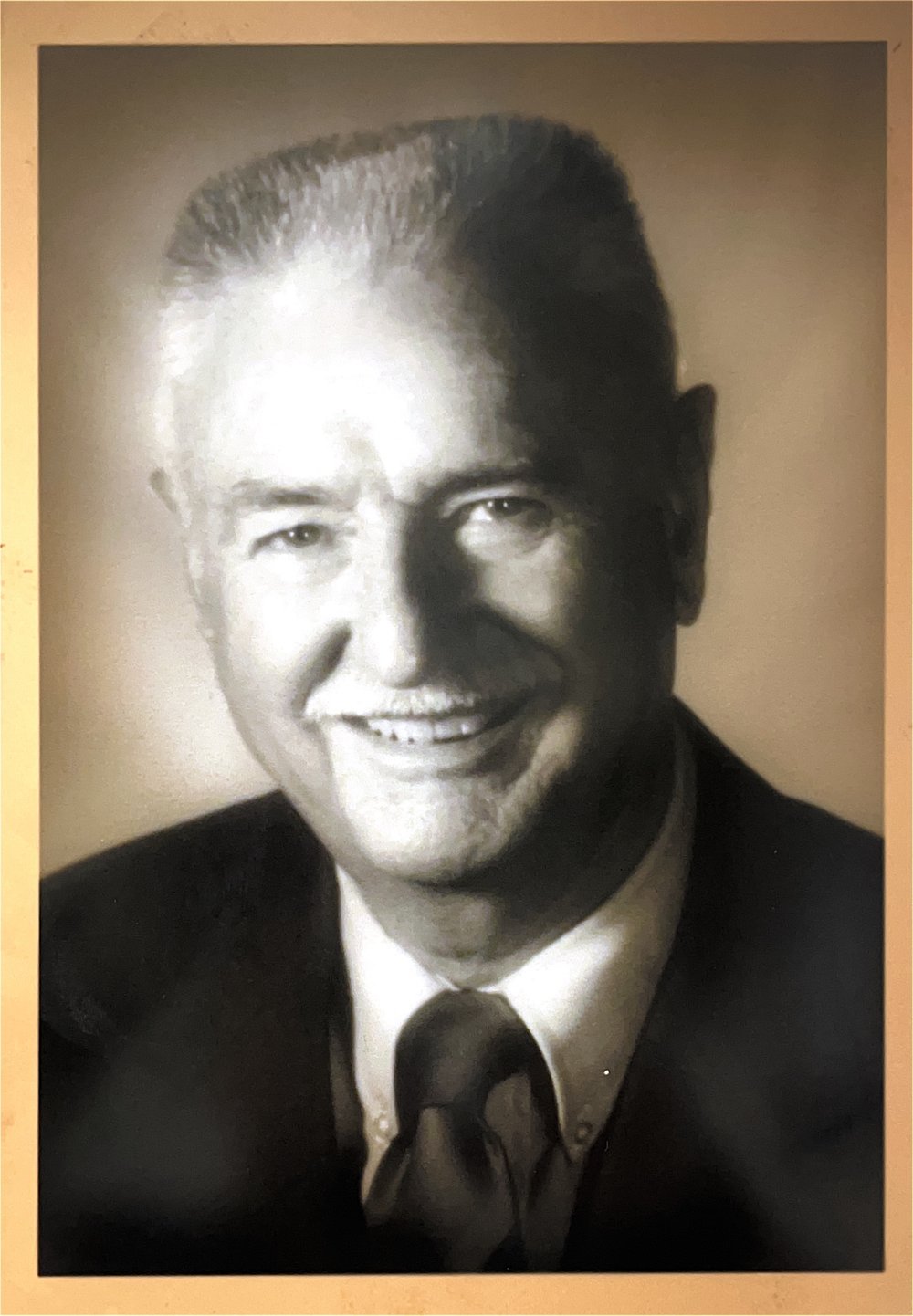
Bill Brooks in his later years, as a Bellevue businessman and civic leader.
After the war, Brooks settled in the Bellevue area and opened a gasoline and auto service station. He had a habit of hiring local kids who needed work — and a strong opinion about what they should do with their paychecks. "My theory was, you have to be pretty darn smart to work in a gasoline station," he later recalled, "and if you are going to succeed, you need to go ahead and get your college education." The trouble was, there wasn't much of anywhere nearby for a working student to do that.
In June 1965, Brooks brought the idea to a Bellevue Chamber of Commerce dinner meeting. He asked for five minutes at the podium; the room's enthusiasm kept him talking for thirty. The business community's response was immediate: Bellevue needed a college of its own. Brooks became one of five founding members of the Board of Directors of Bellevue College, which opened its doors to students in September 1966.
Having interrupted his own studies decades earlier to enlist, Brooks went back and finished what he'd started — graduating in the College's first class of thirty-seven seniors in July 1967.
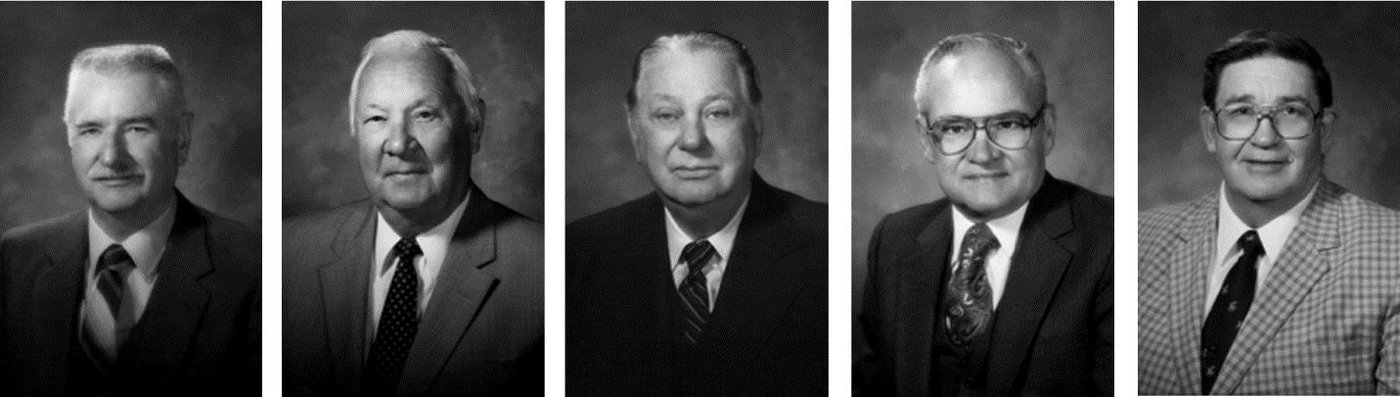
The founding Board of Directors of Bellevue College: William V. Brooks, H.W. Campbell, L.A. Campbell, John S. Reinhart, and Harold A. Smock.
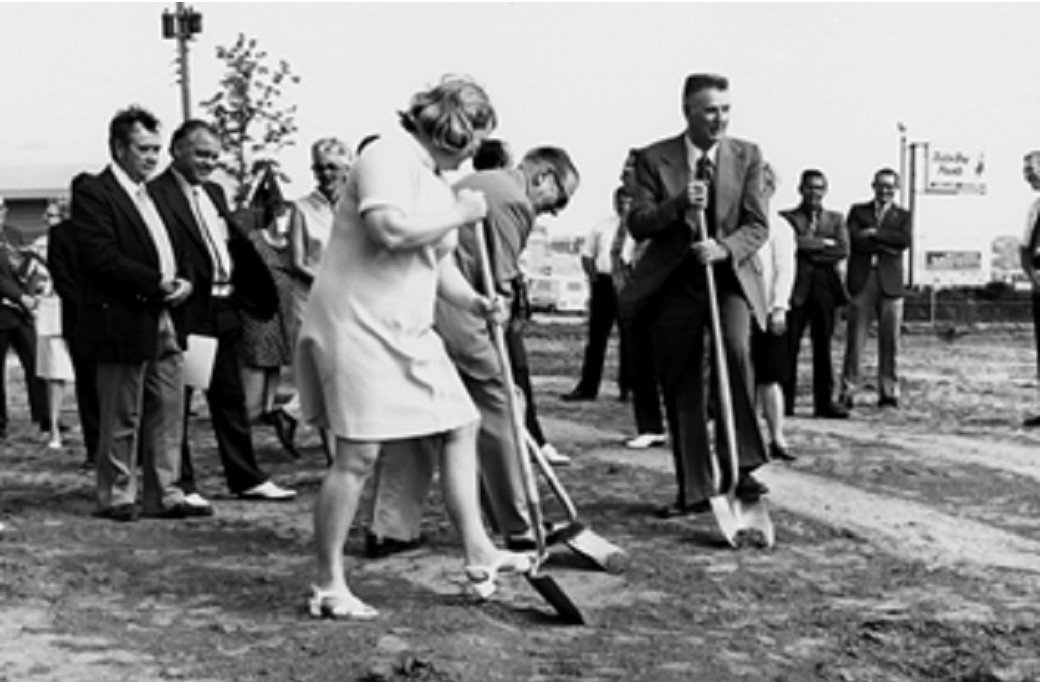
Groundbreaking for the Brooks Library, named in his honor.
The college's early years were not easy — financing, accreditation, building a campus from nothing — and Brooks later admitted it was sometimes a worrying business. He had no regrets about it. He went on to serve on the Board of Directors for most of the institution's first fifty years and received an honorary Doctor of Laws degree from Bellevue College in 1985. By the time of his passing in 2010, Bill Brooks was one of the last surviving American pilots of the Battle of Midway, and Bellevue University — now Nebraska's largest private university — still calls him one of its builders.
Read the Full Service Record
Official citations, the complete after-action report, fitness reports, and Bill Brooks's full Marine Corps record of service (1941–1955).
Carrying His Name Forward
Bill Brooks came home from Midway and the Solomon Islands a decorated WWII aviator, then gave six decades to our community. Your donation carries his spirit forward — for disabled veterans in Bellevue and across the nation.
Donate to DAV